Blog.

The Great Pacific Garbage Patch: Size, Location, and Latest Data
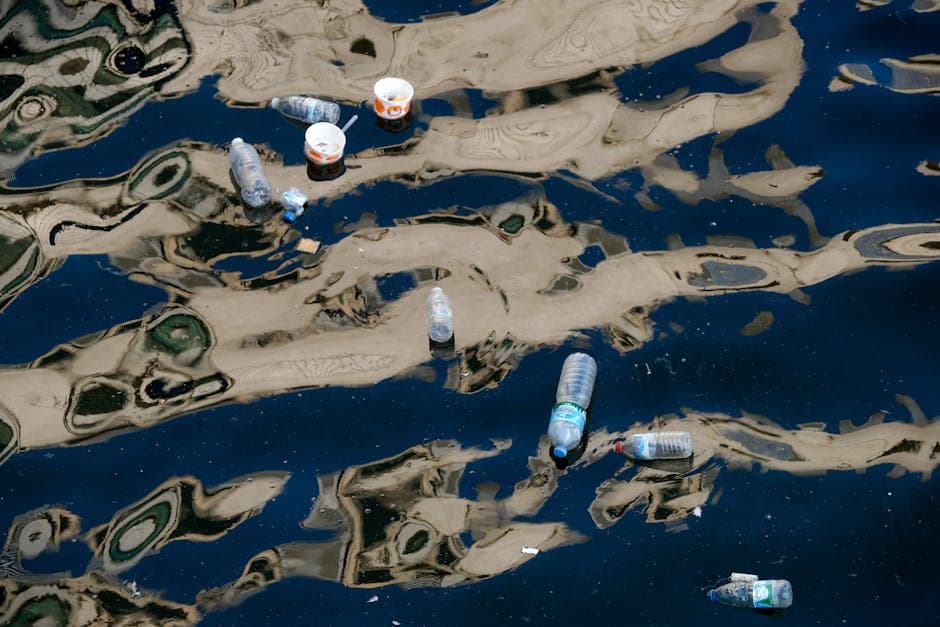
Cover Image for The Great Pacific Garbage Patch: Size, Location, and Latest Data
Toby Stapleton
Toby Stapleton

The Great Pacific Garbage Patch: Size, Location, and What the Data Actually Shows

The Great Pacific Garbage Patch (GPGP) is the largest accumulation of ocean plastic on Earth — a zone of concentrated marine debris spanning approximately 1.6 million square kilometres in the North Pacific Ocean. Contrary to how it's often described, the GPGP is not a solid floating island. It's a diffuse cloud of 1.8 trillion plastic fragments, most of them smaller than a grain of rice, suspended across the upper water column between Hawaii and California.

That disconnect between perception and reality matters. Because the longer the public imagines a visible, scoop-able island of trash, the longer we underestimate how difficult and urgent this problem really is.

Where Exactly Is the Great Pacific Garbage Patch?

The GPGP sits within the North Pacific Subtropical Gyre, a massive system of rotating ocean currents formed by four interacting currents: the North Pacific Current to the north, the California Current along the eastern edge, the North Equatorial Current to the south, and the Kuroshio Current on the west. Together they create a slow clockwise vortex that traps floating debris in a relatively stable zone.

The centre of the patch lies roughly between 135°W and 155°W longitude and 35°N and 42°N latitude — approximately halfway between Hawaii and California. That places it largely in international waters, outside any single country's jurisdiction. NOAA's Marine Debris Programme has mapped the gyre's boundaries through decades of surface trawl surveys, confirming that the debris concentration peaks in this zone and thins gradually toward the edges.

The gyre's geography also explains why cleanup is so logistically challenging. The patch occupies open ocean far from any port, and the debris is scattered across an area three times the size of France. There is no fixed shoreline to work from, no single dumping point to shut down.

How Big Is the Great Pacific Garbage Patch?

The most frequently cited measurement comes from a 2018 study published in Nature Scientific Reports by Laurent Lebreton and colleagues at The Ocean Cleanup. Using multi-vessel aerial surveys and surface trawls, the team estimated the GPGP covers 1.6 million km² — roughly twice the size of Texas, or three times the size of metropolitan France.

That same study produced the headline figure that has since become a benchmark for ocean plastic research: the patch contains an estimated 1.8 trillion pieces of plastic, with a combined mass of approximately 80,000 tonnes (some estimates extend to 100,000 tonnes). To put that in context, 1.8 trillion pieces means roughly 250 pieces of plastic for every human being on the planet, concentrated in a single ocean zone.

The GPGP's size is not static. Analysis by the 5 Gyres Institute indicates that the concentration of floating plastic in the open ocean has been accelerating since roughly 2005, with microplastic counts increasing at a rate that outpaces what accumulation models predicted based on production data alone. Their 2023 study estimated the total number of floating plastic particles across all oceans at 82–358 trillion — meaning the GPGP, while the largest single accumulation, is only one component of a global problem. For more on total ocean plastic figures, see our breakdown of how much plastic is in the ocean.

What Does the Great Pacific Garbage Patch Look Like?

Here is what the GPGP is not: it is not visible from space, it is not a floating landfill, and you cannot walk across it. That image — a solid, garbage-island-in-the-Pacific — is one of the most persistent misconceptions in environmental communication.

The reality is less photogenic and more alarming. The vast majority of the GPGP consists of microplastics: fragments smaller than 5 mm that have degraded from larger objects through UV exposure and mechanical weathering. These particles are suspended throughout the water column, from the surface down to several metres depth, creating a kind of plastic soup that is often invisible to the naked eye. A ship sailing through the centre of the patch might see scattered larger debris — bottle caps, crates, fishing floats — but the water would not look obviously polluted.

What you would notice, if you dragged a fine-mesh trawl net through the surface, is that it comes up full of confetti-sized plastic shards in every colour. That is the signature of the GPGP: not a visible mass but a measurable concentration.

This matters for public understanding because the "garbage island" myth has created unrealistic expectations about cleanup. You cannot simply skim a solid surface. Every approach to removal must contend with billions of tiny particles dispersed across millions of square kilometres of open water.

What Is the Great Pacific Garbage Patch Made Of?

The Lebreton et al. study provided the most detailed composition analysis to date. The findings reframed the conversation about ocean plastic.

Fishing gear dominates. An estimated 46% of the GPGP's total mass is abandoned fishing nets, often called ghost nets. These are heavy, durable, made of synthetic polymers (nylon, polyethylene, polypropylene), and they continue to trap and kill marine life long after they're lost or discarded — a phenomenon known as ghost fishing.

The remaining mass consists of:

Join the movement

Turn plastic waste into prosperity

Plastic Bank pays collectors in coastal communities to gather plastic before it reaches the ocean. Join 26,000+ members already taking action — free to start, your first 50 bottles are on us.

Register with email

9.4 billion bottles collected · 62,918 collectors · 6 countries

  • Hard plastic fragments — broken pieces of consumer products, construction materials, and industrial packaging
  • Plastic films — degraded bags, wrappers, and sheeting
  • Microplastics — the most numerous category by count, though contributing less by weight
  • Ropes and lines — from maritime and fishing operations
  • Foamed plastics — polystyrene (Styrofoam), buoys, and insulation

A study published in Scientific Reports found that roughly one-third of identifiable plastics in the GPGP originated from Japan, likely swept out to sea during the 2011 Tōhoku tsunami. The rest traced back to fishing fleets and land-based sources across the Pacific Rim.

For a broader look at the types of debris entering the ocean, see trash in the ocean.

How Does Plastic End Up in the Great Pacific Garbage Patch?

Plastic reaches the GPGP through two primary pathways: land-based runoff and direct ocean dumping.

Land-based sources account for roughly 80% of ocean plastic. Mismanaged waste (plastic that is improperly collected, openly dumped, or leaking from informal disposal sites) washes into streams, rivers, and storm drains, eventually reaching the coast. A 2015 study by Jenna Jambeck and colleagues in Science estimated that between 4.8 and 12.7 million tonnes of plastic entered the ocean from land each year. Subsequent research has refined this range, but the core finding stands: most ocean plastic starts on land.

Rivers serve as the primary conveyor belt. Research has identified approximately 1,000 rivers that contribute 80% of riverine plastic pollution, including major waterways in Southeast Asia, South Asia, and West Africa. For a detailed explanation, see our post on how plastic ends up in the ocean.

Sea-based sources contribute the remaining 20%, including lost fishing gear, shipping containers that fall overboard, and waste discharged directly from vessels. The high proportion of fishing nets in the GPGP reflects this maritime input.

Once plastic reaches the open ocean, the North Pacific Subtropical Gyre acts as a slow funnel. Currents carry floating debris inward toward the calm centre of the gyre, where wind-driven convergence causes it to accumulate. Plastic entering the gyre can take months or years to reach the centre, and once there, it circulates and degrades but rarely escapes.

Are There Other Ocean Garbage Patches?

The GPGP is the most studied, but it is not the only one. Earth's oceans contain five major subtropical gyres, and each traps floating debris in a similar pattern:

  1. North Pacific Gyre — home to the GPGP, the largest and most studied
  2. South Pacific Gyre — less studied, but growing evidence of microplastic concentration
  3. North Atlantic Gyre — the North Atlantic Garbage Patch, concentrated in the Sargasso Sea region
  4. South Atlantic Gyre — the least studied of the five
  5. Indian Ocean Gyre — significant plastic accumulation, fed by rivers in South and Southeast Asia

Beyond the gyres, plastic concentrates along coastlines, in semi-enclosed seas like the Mediterranean, and on the deep ocean floor. The surface patches represent only the visible fraction. Estimates suggest that 3–11 million tonnes of plastic sit on the seafloor, far exceeding what floats on the surface. For a full accounting, see plastic pollution in the ocean.

What Is the Environmental Impact of the Great Pacific Garbage Patch?

The ecological consequences of the GPGP are severe and well-documented.

Entanglement and ingestion are the most direct threats. Ghost nets entangle sea turtles, seals, dolphins, and seabirds, causing injury, starvation, and drowning. Marine animals mistake plastic fragments for food — sea turtles confuse plastic bags for jellyfish, albatrosses feed plastic to their chicks, and filter-feeding whales ingest microplastics with every mouthful of water.

Research published in Frontiers in Marine Science has found that over 700 marine species are known to interact with plastic debris. In the GPGP specifically, studies have documented plastic ingestion in fish, seabirds, and invertebrates at rates that suggest chronic exposure rather than occasional encounters. Plasticbank.com's coverage of four marine species endangered by plastic waste details the biological mechanisms at work.

Chemical contamination adds a less visible layer of harm. Plastics absorb persistent organic pollutants (POPs) from seawater, including PCBs and DDT, concentrating them at levels far higher than the surrounding water. When marine organisms ingest these plastics, the pollutants leach into their tissues and biomagnify up the food chain. Fish caught in the North Pacific have been found with elevated concentrations of plastic-associated chemicals.

Habitat disruption is an emerging concern. The GPGP has created a novel floating ecosystem — researchers have dubbed it the "plastisphere," where organisms colonise plastic surfaces and can be transported across ocean basins. This enables invasive species to reach ecosystems they would never have accessed otherwise.

Can the Great Pacific Garbage Patch Be Cleaned Up?

Several organisations are working on open-ocean removal. The most prominent is The Ocean Cleanup, a Dutch nonprofit that has deployed its System 03, a large-scale floating barrier designed to passively collect plastic from the surface using ocean currents. Their operations have removed hundreds of tonnes of debris from the GPGP, and they aim to scale collection capacity over the coming years.

But cleanup alone faces fundamental constraints. The sheer volume of microplastics makes complete removal impossible with current technology — the particles are too small, too numerous, and too dispersed. Removing fishing nets and large debris is achievable; removing trillions of microplastic fragments without also capturing plankton and marine life is not.

This is why most ocean scientists and environmental economists stress that prevention is far more effective than extraction. Every tonne of plastic intercepted before it reaches a river or coastline costs a fraction of what open-ocean retrieval requires, and it prevents the decades of degradation that turn a single bottle into thousands of microplastic fragments.

Organisations working at the source have demonstrated this at scale. Plastic Bank's community collection programme operates across the Philippines, Indonesia, Brazil, Egypt, and Thailand, paying coastal collection community members to gather plastic waste before it reaches waterways. Since 2013, the programme has collected over 9.4 billion plastic bottles, material that would otherwise have joined the flow toward patches like the GPGP. As Plastic Bank's own research notes, the ocean faces a plastic time bomb if upstream interception doesn't scale alongside downstream cleanup.

The most effective strategy is both: remove what's already there while cutting the input at the source. Right now, global plastic production continues to rise, and the gap between what enters the ocean and what gets removed widens every year.

How Fast Is the Great Pacific Garbage Patch Growing?

Data from the 5 Gyres Institute indicates that the concentration of floating microplastics in the open ocean has increased rapidly since 2005 — a period that coincides with a steep acceleration in global plastic production. Between 2005 and 2023, plastic production grew by approximately 70%, and disposal infrastructure in many of the highest-leakage countries did not keep pace.

The OECD's Global Plastics Outlook projects that without significant policy intervention, the flow of plastic from rivers to the ocean will roughly double to 3.6 million tonnes per year by 2060. A landmark 2020 report by the Pew Charitable Trusts and SYSTEMIQ, Breaking the Plastic Wave, concluded that without comprehensive action across the plastic value chain, the total volume of plastic entering the ocean could triple by 2040 compared to 2016 levels.

That means the GPGP — already the size of Alaska — is likely to continue growing unless both production and waste management systems change fundamentally.

Key Takeaways

The Great Pacific Garbage Patch is the most visible symptom of a systemic failure in how the world produces, uses, and disposes of plastic. At 1.6 million km² and 1.8 trillion pieces, it represents decades of accumulated waste trapped by ocean currents in the North Pacific Subtropical Gyre. Nearly half its mass consists of discarded fishing nets, and the vast majority of its particle count is microplastics invisible to the naked eye. Cleanup efforts are underway but face physical limits — the particles are too small and too dispersed for complete removal. The data points clearly toward prevention as the higher-leverage intervention: intercepting plastic in coastal communities and river systems before it fragments and disperses into the open ocean. Every bottle stopped upstream is one fewer source of thousands of microplastic fragments downstream.


Sources: