Blog.

Trash in the Ocean: Where It Comes From and Where It Ends Up
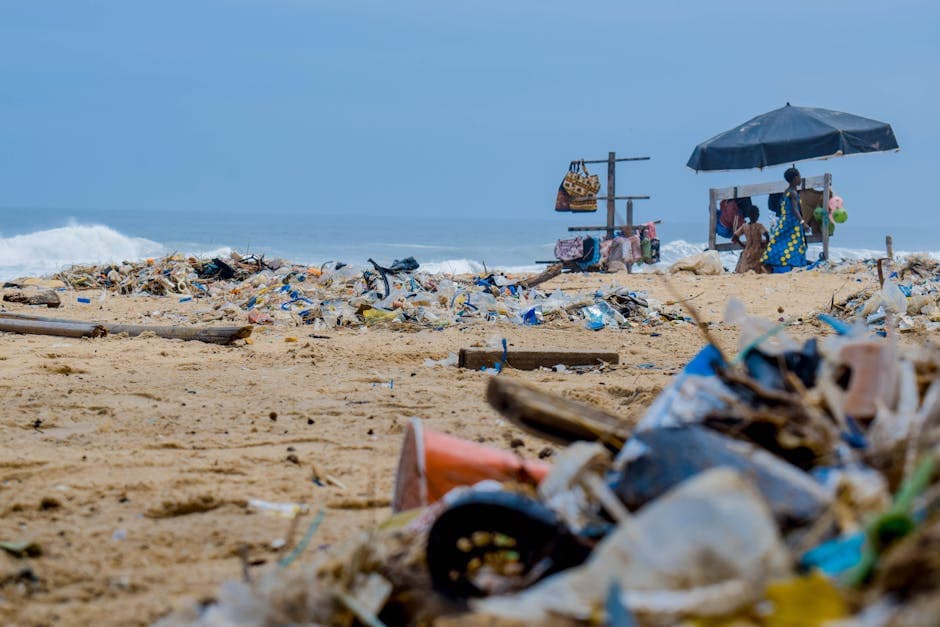
Cover Image for Trash in the Ocean: Where It Comes From and Where It Ends Up
Toby Stapleton
Toby Stapleton

Trash in the Ocean: Where It Comes From and Where It Ends Up

A plastic bottle drops from a bin on a city street in Manila. Rain washes it into a storm drain. The drain feeds a river. The river carries it 40 kilometres to Manila Bay. Within days, ocean currents pull it west. Within months, it joins a slow-moving gyre of debris spanning hundreds of thousands of square kilometres.

That bottle is now one of an estimated 75 to 199 million tonnes of plastic waste currently in the ocean, according to a 2020 analysis published in Science by Borrelle et al. And plastic is just the most persistent category. Glass, metal, rubber, paper, wood, and textiles all enter the ocean through the same channels. The result is a waste crisis that spans urban shorelines and the deepest ocean trenches alike.

How Much Trash Is in the Ocean?

Estimating the total amount of trash in the ocean is difficult because debris distributes across the surface, the water column, and the seafloor — and only a fraction of it is visible.

On the ocean surface, research by Eriksen et al. (2014) published in PLOS ONE estimated at least 5.25 trillion plastic particles weighing approximately 269,000 tonnes floating across the world's oceans. But surface plastic represents a small percentage of total ocean plastic. A 2024 study by Egger et al. published in Nature Geoscience found that the deep ocean floor holds an estimated 9.4 to 15.9 million tonnes of microplastic debris alone — far exceeding the surface load.

The IUCN's marine plastics brief cites annual ocean input of at least 14 million tonnes of plastic, which makes up approximately 80% of all marine debris by mass. The remaining 20% includes glass bottles, aluminium cans, rubber, discarded clothing, and fishing gear components.

Total ocean trash — accounting for surface debris, suspended particles, and seafloor accumulation — likely exceeds 100 million tonnes. And the problem is accelerating. Global plastic production reached 400 million tonnes in 2022, according to the OECD, and is projected to triple by 2060 if current policies remain unchanged.

Where Does Ocean Trash Come From?

Roughly 80% of ocean trash originates on land, with the remaining 20% coming from maritime activities. Understanding these pathways is essential to cutting off the flow.

Land-based sources break down into several categories:

  • Municipal solid waste accounts for the largest share. In regions without adequate waste collection infrastructure, household trash enters the environment directly. The World Bank's What a Waste 2.0 report estimates that 2 billion people worldwide lack access to formal waste collection services. Uncollected waste accumulates in open dumps, roadsides, and waterways.
  • Industrial waste includes plastic pellets (nurdles), packaging materials, and manufacturing by-products that enter waterways through improper storage, spills, and inadequate effluent treatment. A single pellet spill can release billions of pre-production plastic beads into rivers and coastal waters.
  • Agricultural runoff carries plastic mulch film, fertiliser bags, pesticide containers, and irrigation tubing into drainage systems. In intensive farming regions, agricultural plastic waste is a significant but often undercounted source.
  • Stormwater runoff is one of the primary conveyance mechanisms. Rain washes litter from streets, car parks, construction sites, and landfills into storm drains, which typically discharge directly into rivers or the ocean without filtration.

Rivers are the dominant transport pathway. A 2021 study by Meijer et al. published in Science Advances modelled plastic emissions from over 100,000 rivers worldwide and found that approximately 1,000 rivers account for 80% of all riverine plastic flow into the ocean. The top contributors include rivers in Southeast Asia, South Asia, and West Africa — regions characterised by high population density, rapid urbanisation, and limited waste management capacity. Research by The Ocean Cleanup has validated these models through direct measurement campaigns in rivers across Indonesia, Malaysia, Jamaica, and the Dominican Republic.

Sea-based sources contribute the remaining 20%:

  • Commercial fishing generates the largest maritime waste stream. Lost, abandoned, or discarded fishing gear (ALDFG), known as ghost gear, accounts for an estimated 10% of all marine litter by mass, according to the FAO. Ghost nets can drift for years, entangling marine wildlife along the way.
  • Shipping contributes waste through cargo loss, operational discharges, and container spills. The World Shipping Council reports that an average of 1,566 containers were lost at sea annually between 2008 and 2022.
  • Recreational boating adds localised litter in coastal and inland waters.

Wind transport also plays a role. Lightweight items — plastic bags, foam cups, food wrappers, blow directly from coastal areas into the ocean. A 2020 study in Nature Reviews Earth & Environment estimated that wind-blown litter is a significant but understudied pathway, particularly in arid coastal regions.

What Types of Trash Are Most Common in the Ocean?

The Ocean Conservancy's International Coastal Cleanup (ICC) is the world's largest annual volunteer debris survey, covering over 100 countries. Their data provides the most consistent global snapshot of what washes up on shorelines.

According to the Ocean Conservancy's most recent ICC report, the top ten items recovered from beaches worldwide are:

  1. Cigarette butts — the single most collected item for over 30 consecutive years
  2. Food wrappers (candy wrappers, crisp packets, snack packaging)
  3. Plastic beverage bottles
  4. Plastic bottle caps
  5. Plastic grocery bags and other bags
  6. Straws and stirrers
  7. Plastic cups and plates
  8. Plastic lids
  9. Foam take-out containers
  10. Plastic forks, knives, and spoons

All ten items are single-use products, and nine out of ten are plastic. These items reflect a global consumption pattern: products designed for minutes of use, made from materials that persist for centuries.

Join the movement

Turn plastic waste into prosperity

Plastic Bank pays collectors in coastal communities to gather plastic before it reaches the ocean. Join 26,000+ members already taking action — free to start, your first 50 bottles are on us.

Register with email

9.4 billion bottles collected · 62,918 collectors · 6 countries

Ghost fishing nets deserve separate attention. Although they rank lower in beach cleanup counts, they represent some of the most destructive trash in the ocean by impact. A 2022 report by the Global Ghost Gear Initiative estimated that ghost gear makes up 46% of the mass of the Great Pacific Garbage Patch, based on data from The Ocean Cleanup's aerial surveys. These nets continue to function as traps long after they are abandoned, catching fish, turtles, sharks, and marine mammals.

Where Does Ocean Trash Accumulate?

Ocean currents do not distribute trash evenly. They concentrate it in specific zones — some visible, most hidden.

Ocean gyres are the most well-known accumulation zones. Five major subtropical gyres — in the North Pacific, South Pacific, North Atlantic, South Atlantic, and Indian Ocean — act as slow-moving whirlpools that trap floating debris. The Great Pacific Garbage Patch, located between Hawaii and California, is the largest. A 2018 study by Lebreton et al. published in Scientific Reports estimated it covers 1.6 million square kilometres — roughly three times the size of France — and contains approximately 80,000 tonnes of plastic.

Despite the name, garbage patches are not solid islands of waste. They are diffuse zones of elevated microplastic concentration, with larger debris items scattered across the area. Most of the material is small, fragmented, and suspended just below the surface.

Coastal zones and beaches accumulate disproportionate amounts of trash, particularly near river mouths and urban centres. A 2019 study in Science of the Total Environment found that 50% of all beach litter globally was concentrated within 10 kilometres of a river outlet.

The deep seafloor holds the largest reservoir of ocean plastic by mass. Research published in Frontiers in Marine Science (2020) found that deep-sea sediments may contain up to 25 times more microplastic per unit area than surface waters in the same region. Plastic sinks as it becomes fouled with algae and marine organisms — a process called biofouling — and accumulates in canyons, trenches, and abyssal plains where it is unlikely to ever be recovered.

Arctic regions, once assumed to be pristine, are now confirmed trash accumulation zones. The Barents Sea receives plastic transported from the North Atlantic by thermohaline circulation, and researchers have documented microplastics frozen in Arctic sea ice at concentrations exceeding those in the Great Pacific Garbage Patch.

How Long Does Trash Last in the Ocean?

Plastic does not biodegrade. It photodegrades — breaking down under UV light into progressively smaller fragments without ever fully disappearing from the environment. This process creates microplastics (fragments smaller than 5 mm) and eventually nanoplastics (smaller than 1 micrometre), which persist indefinitely.

Estimated decomposition timelines for common ocean trash items:

Item Estimated Time to Decompose
Paper towel 2–4 weeks
Newspaper 6 weeks
Cardboard box 2 months
Cotton t-shirt 2–5 months
Plywood 1–3 years
Plastic bag 10–20 years
Tin can 50 years
Aluminium can 200 years
Plastic bottle 450 years
Disposable nappy 450 years
Fishing line 600 years
Glass bottle 1 million years
Styrofoam Indefinite (does not fully decompose)

Sources: NOAA Marine Debris Program, UNESCO

These figures are estimates based on laboratory and field observations. Real-world decomposition rates vary with temperature, UV exposure, mechanical abrasion, and biological activity. In deep-sea conditions — cold, dark, and low-oxygen — degradation slows dramatically. A plastic bottle that might fragment into microplastics in 450 years on a sunlit beach could persist far longer on the ocean floor.

The practical implication: virtually every piece of plastic ever produced and released into the ocean is still there in some form. It has not gone away. It has only gotten smaller — and harder to recover.

For a full breakdown of how much of this material is plastic, see our analysis of how much plastic is in the ocean.

How Can We Stop Trash from Reaching the Ocean?

Preventing trash from entering the ocean is far more effective and economical than trying to remove it once it is there. Every strategy that works focuses on upstream intervention.

Source reduction is the most direct lever. Banning or restricting single-use plastic items — bags, straws, cutlery, foam containers, has reduced beach litter in jurisdictions that have implemented these policies. The European Union's Single-Use Plastics Directive, enacted in 2021, banned the ten most commonly found beach litter items. Early monitoring data shows measurable reductions in those specific items on EU beaches.

Waste management infrastructure is the gap that matters most. In countries where uncollected waste is the primary leakage pathway, building collection systems, recycling capacity, and sanitary landfills directly reduces ocean input. The World Bank estimates that waste collection coverage must reach 90% in low- and middle-income countries to significantly reduce ocean plastic input — up from roughly 40% today.

Community-based collection programmes fill the gap where formal systems are absent or incomplete. Plastic Bank operates collection branches across the Philippines, Indonesia, Brazil, Egypt, and Thailand, where community members earn income by gathering plastic waste before it enters waterways. The programme has prevented 9.4 billion bottles from becoming ocean trash. By assigning economic value to plastic that would otherwise be discarded, the model creates a self-sustaining incentive structure that scales with the scope of the problem, especially in regions identified by Meijer et al. as the highest-emitting river basins. Plastic Bank's approach also addresses what happens to plastic after collection: materials are recycled into blockchain-verified Social Plastic® feedstock, so the journey of plastic waste ends in a factory, not the ocean.

Extended Producer Responsibility (EPR) shifts the cost of waste management to the companies that produce packaging and products. Countries including France, Germany, South Korea, and the Philippines have enacted EPR legislation requiring producers to fund collection and recycling of their packaging waste. When designed well, EPR increases recycling rates and reduces the volume of packaging entering the environment.

International policy is slowly catching up. The United Nations Environment Programme (UNEP) is leading negotiations on a Global Plastics Treaty, which aims to establish binding international rules on plastic production, waste management, and pollution. The treaty's fifth round of negotiations (INC-5) concluded without final agreement in late 2025, but discussions continue with significant momentum. An effective treaty would set reduction targets, mandate EPR frameworks, and fund waste infrastructure in the countries that need it most.

No single solution will fix this. It requires production limits to reduce plastic pollution in the ocean, better waste collection, and continued support for the community members already intercepting ocean pollution at its source. The data tells us where the trash comes from. The challenge is building the infrastructure to stop it.


Sources cited in this article include peer-reviewed studies from Science, Science Advances, PLOS ONE, Nature Geoscience, Scientific Reports, Nature Reviews Earth & Environment, Frontiers in Marine Science, and Science of the Total Environment. Data from the IUCN, NOAA, UNESCO, OECD, World Bank, FAO, Ocean Conservancy, and The Ocean Cleanup.