Blog.

How Does Plastic End Up in the Ocean? 5 Pathways Explained
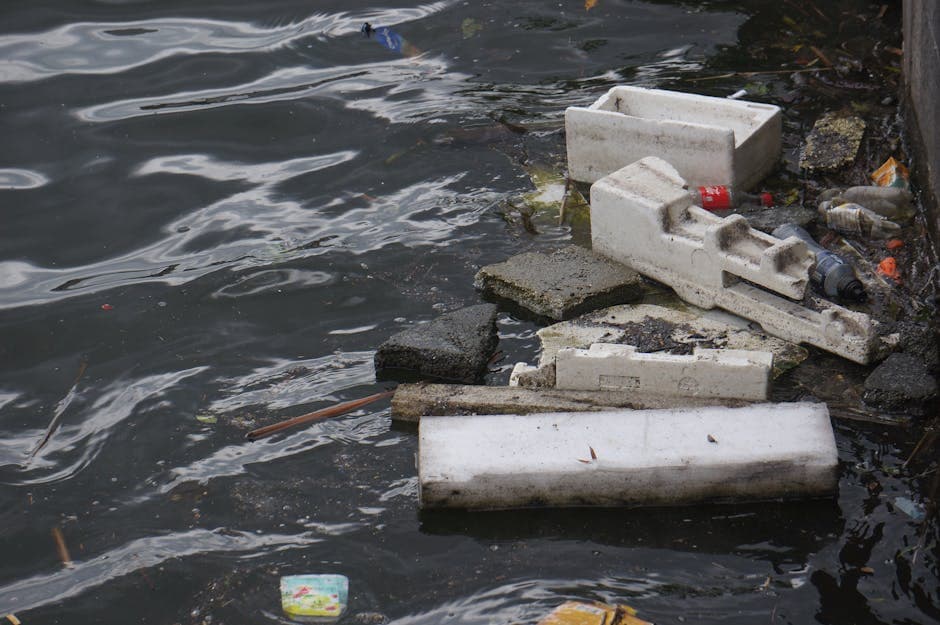
Cover Image for How Does Plastic End Up in the Ocean? 5 Pathways Explained
Toby Stapleton
Toby Stapleton

How Does Plastic End Up in the Ocean?

Plastic enters the ocean through five primary pathways: rivers, stormwater runoff, coastal waste mismanagement, maritime activities, and wind transport. Roughly 80% of marine plastic originates on land, carried to the sea through drainage systems, waterways, and direct dumping. The remaining 20% comes from activities at sea — fishing, shipping, and offshore operations.

Understanding these pathways matters because they determine where intervention is most effective. An estimated 19 to 23 million tonnes of plastic waste enter aquatic ecosystems every year, according to UNEP. Stopping that flow requires knowing exactly how it moves.

How Do Rivers Carry Plastic to the Ocean?

Rivers are the single largest conveyor belt for land-based plastic reaching the sea. They collect waste from cities, agricultural land, and informal settlements along their banks and carry it downstream to the coast.

A 2021 study by The Ocean Cleanup revised earlier estimates and identified roughly 1,000 rivers as responsible for approximately 80% of riverine plastic emissions. Previous research had focused on just 10 to 20 major rivers, but The Ocean Cleanup's more granular analysis showed that thousands of smaller rivers — many in tropical regions — collectively contribute enormous volumes of plastic.

The top contributors share common features: dense populations along their banks, limited waste collection infrastructure, and heavy monsoon rainfall that flushes accumulated waste into the water. Rivers in Southeast Asia, South Asia, and sub-Saharan Africa dominate the rankings. The Pasig River in Manila, the Brantas in Indonesia, and the Ganges in India consistently appear among the highest-emitting waterways.

Monsoon seasons create dramatic spikes in plastic flow. During dry months, plastic accumulates on riverbanks, in drainage channels, and along flood plains. When the rains arrive, this stockpiled waste washes into rivers in enormous pulses. A single monsoon event can carry more plastic to the ocean than months of dry-season flow. This seasonal pattern explains why plastic leaks from land to ocean in Indonesia at rates far higher than temperate countries with similar populations.

River interception — using booms, barriers, and collection boats — is gaining traction as a mitigation strategy. But engineers and policymakers increasingly recognise that catching plastic in a river is far more expensive per kilogram than preventing it from reaching the river in the first place.

How Does Stormwater Runoff Carry Plastic to the Sea?

Rain does not just wash away dirt. It picks up microplastics from roads, parking lots, construction sites, and agricultural fields, carrying them through storm drains directly into rivers, estuaries, and coastal waters.

Urban stormwater systems in many cities were designed to move rainwater away from streets as quickly as possible. In older infrastructure — common across North America, Europe, and rapidly growing cities in the Global South — storm drains flow directly to waterways without any filtration or treatment. Litter on roads, tyre rubber fragments ground into asphalt, plastic pellets spilled near factories — all of it enters the stormwater system and travels to the ocean.

Tyre wear particles are among the largest sources of microplastic pollution globally. A 2020 study published by the Pew Charitable Trusts identified road runoff containing tyre dust as a major and largely unaddressed pathway. Every time a car brakes, accelerates, or turns, microscopic fragments of synthetic rubber shed from the tyre surface. These particles are small enough to pass through most drainage filters and persistent enough to accumulate in marine sediments.

Agricultural runoff adds another dimension. Plastic mulch films — used extensively in China, Europe, and parts of Africa — degrade into fragments that wash off fields during irrigation and rainfall. Fertiliser bags, pesticide containers, and irrigation pipe fragments contribute additional agricultural plastic to waterways. A study in Environmental Science & Technology estimated that agricultural soils in some regions contain higher concentrations of microplastics than ocean surface waters.

Stormwater plastic is hard to see and easy to ignore. Unlike a floating bottle in a river, tyre dust and agricultural film fragments are invisible to the naked eye. That invisibility has made stormwater one of the least-regulated plastic pathways despite its scale.

Why Do Coastal Communities Without Waste Infrastructure Contribute the Most?

Approximately 2 billion people worldwide lack access to formal waste collection services, according to World Bank estimates. In coastal areas, uncollected waste sits metres from the water's edge. High tides, storm surges, and rain carry it into the ocean within days.

Join the movement

Turn plastic waste into prosperity

Plastic Bank pays collectors in coastal communities to gather plastic before it reaches the ocean. Join 26,000+ members already taking action — free to start, your first 50 bottles are on us.

Register with email

9.4 billion bottles collected · 62,918 collectors · 6 countries

The problem is infrastructure, not individual behaviour. In many coastal communities across Southeast Asia, West Africa, and Central America, there are no collection trucks, no transfer stations, no managed landfills. Residents dispose of waste in the nearest open space — often a riverbank, drainage ditch, or beach. When that waste includes plastic — and in the modern economy, it almost always does — the ocean is the final destination.

Open dumpsites near coastlines are another major source. The International Solid Waste Association (ISWA) has documented thousands of uncontrolled dump sites within 10 kilometres of coastlines in low-income countries. These sites have no liners, no covers, and no leachate management. Plastic blows off the pile, washes away in rain, and migrates steadily toward the water.

This pathway is also where prevention delivers the greatest return. Collecting plastic in a coastal community before it enters the water costs a fraction of what it takes to intercept it in a river — and is orders of magnitude cheaper than retrieving it from the open ocean. In coastal communities across the Philippines, Indonesia, Brazil, Egypt, and Thailand, Plastic Bank operates collection branches where community members earn income by gathering plastic waste. This approach intercepts plastic at the most critical point — before it enters rivers and coastal waters. As of March 2026, collection community members have gathered over 9.4 billion plastic bottles through the programme, according to Plastic Bank's live tracker.

The economics are straightforward: giving plastic value in the community where it is discarded stops it from becoming pollution. When plastic waste turns into an income source, people collect it instead of discarding it.

How Do Maritime Activities Add Plastic to the Ocean?

Not all ocean plastic comes from land. An estimated 20% originates from maritime sources — commercial fishing, shipping, offshore energy production, and aquaculture, according to the International Maritime Organization.

Fishing gear is the dominant sea-based source. The Food and Agriculture Organization (FAO) estimates that approximately 640,000 tonnes of fishing nets, lines, traps, and pots are lost or abandoned in the ocean every year. This "ghost gear" does not stop working when it is lost. Abandoned nets continue to trap and kill marine life for years, a phenomenon called ghost fishing. Ghost nets make up a significant portion of the plastic debris in the Great Pacific Garbage Patch, where fishing gear accounts for an estimated 46% of the total mass.

Shipping containers fall overboard more often than most people realise. The World Shipping Council reported an average of 1,566 containers lost at sea annually between 2020 and 2023. Each container can hold tonnes of consumer goods, many packaged in plastic. When containers breach in the water, their contents scatter across hundreds of kilometres of ocean surface.

Offshore oil and gas platforms generate plastic waste through equipment degradation, packaging disposal, and operational spills. While regulations require these facilities to manage waste onshore, compliance varies and enforcement is difficult in international waters.

Aquaculture — fish and shellfish farming — is a growing source of marine plastic. Buoys, cages, ropes, and feed bags made from plastic degrade in seawater and release fragments into the surrounding environment. As the aquaculture industry expands to meet global protein demand, so does its plastic footprint.

Can Wind Carry Plastic into the Ocean?

Yes. Lightweight plastics — bags, film, polystyrene foam, and microplastic particles — are transported by wind from landfills, streets, construction sites, and agricultural fields, sometimes travelling hundreds of kilometres before landing in the ocean.

Wind transport has long been underestimated as a pathway. But a growing body of research shows that atmospheric deposition of microplastics is a significant source of ocean contamination. Scientists have found microplastics in the air above remote mountain ranges, in rainfall samples from U.S. national parks, and in fresh snow in the Arctic.

A 2019 study in Science documented microplastic "rain" falling on protected wilderness areas in the western United States, far from any urban source. The researchers estimated that over 1,000 tonnes of microplastic particles fall on U.S. national parks and wilderness areas each year — equivalent to more than 120 million plastic water bottles.

Wind-blown macroplastics are more visible. Anyone who has walked near a landfill on a windy day has seen bags and packaging sailing over fences and boundaries. Coastal landfills are especially problematic: plastic blown from waste piles can reach the ocean within minutes. Construction sites that use plastic sheeting, foam insulation, and plastic-wrapped materials are another common source of wind-dispersed plastic.

Atmospheric transport means that even landlocked plastic waste contributes to ocean pollution. A plastic bag discarded in a city 500 kilometres from the coast can be lofted by wind, deposited in a river catchment, carried downstream, and reach the ocean, a journey that may take weeks or months but happens continuously at scale.

Where Is Intervention Most Effective?

Not all plastic pollution interventions are equal. The cost per kilogram of plastic removed varies by orders of magnitude depending on where in the pathway you act.

Community collection (before plastic reaches waterways): This is the cheapest and most effective intervention point. Collecting plastic waste in a community, especially in coastal areas without formal waste management, prevents it from entering rivers and oceans at a fraction of the cost of downstream recovery. Programmes that pay collection community members to gather plastic, like those operated by Plastic Bank, combine pollution prevention with poverty reduction.

River interception: Barriers, booms, and collection vessels deployed in high-emission rivers can capture significant volumes of plastic before it reaches the ocean. The Ocean Cleanup's Interceptor technology targets the 1,000 rivers responsible for most riverine plastic. River interception works, but it costs more per kilogram than community collection and cannot catch microplastics that pass under or through barriers.

Ocean cleanup: Removing plastic from the open ocean is the most expensive option by far. The logistical costs of operating vessels across millions of square kilometres, the fuel consumption, and the difficulty of separating plastic from marine life make ocean cleanup roughly 10 to 100 times more costly per kilogram than land-based prevention. Ocean cleanup addresses the symptom, not the cause.

Policy solutions: Extended Producer Responsibility (EPR) laws, single-use plastic bans, and deposit return schemes tackle the problem at the production and consumption stages. EPR legislation forces the companies that create plastic packaging to fund its end-of-life management. Deposit return schemes — where consumers pay a small fee on a bottle and receive it back when they return the bottle for recycling — have achieved return rates above 90% in countries like Germany and Norway.

The numbers confirm what field workers already know: preventing plastic from reaching the ocean is cheaper, faster, and more effective than pulling it out once it is there. Investment in waste collection infrastructure in high-leakage coastal communities delivers the highest return per dollar spent.

For more on the scale of ocean contamination, read our guides on how much plastic is in the ocean, ocean pollution facts, and the growing problem of trash in the ocean. You can also explore our companion article on plastic pollution in the ocean for a broader look at the crisis.